
The Five-Area Framework
Most investors who look at NNN deals focus almost entirely on the cap rate. They see 6.5% and either get excited or pass. That is not deal analysis. That is one number out of five areas that determine whether a deal is actually worth buying.
After 47 acquisitions I evaluate every NNN deal across five areas in this exact sequence. Skipping any one of them creates blind spots that turn a good-looking deal into a problem. I have seen attractive cap rates on deals I would never touch. I have also bought deals at thin cap rates that outperformed because the other four areas were exceptional.
Work through them in order. Tenant credit comes first because if the tenant fails the credit test, nothing else matters. Capital stack comes last because it is the most flexible variable: you can structure the financing differently, but you cannot change who signed the lease.
Area 1: Tenant Credit
The lease is only worth what the tenant is worth. A 15-year absolute NNN lease from a tenant who files for bankruptcy in year 3 is a vacant building with a mortgage. Tenant credit analysis is where deal evaluation starts.
Investment-Grade vs. Non-Investment-Grade
Investment-grade tenants carry S&P ratings of BBB- or higher. This threshold signals that institutional investors: insurance companies, pension funds, REITs: are comfortable holding their paper. Investment-grade ratings represent the top tier of NNN tenant quality and command the lowest cap rates (highest prices) in the market.
| Tenant | S&P Rating | Category | Typical Cap Range |
|---|---|---|---|
| McDonald's | BBB+ | QSR | 4.25 to 5.0% |
| Starbucks | BBB+ | QSR / Coffee | 4.5 to 5.5% |
| Dollar General | BBB | Dollar Store | 5.5 to 6.5% |
| Dollar Tree / Family Dollar | BBB- | Dollar Store | 5.75 to 6.75% |
| Taco Bell (franchisee) | Unrated | QSR | 5.5 to 6.5% |
| Burger King (franchisee) | Unrated | QSR | 5.75 to 6.75% |
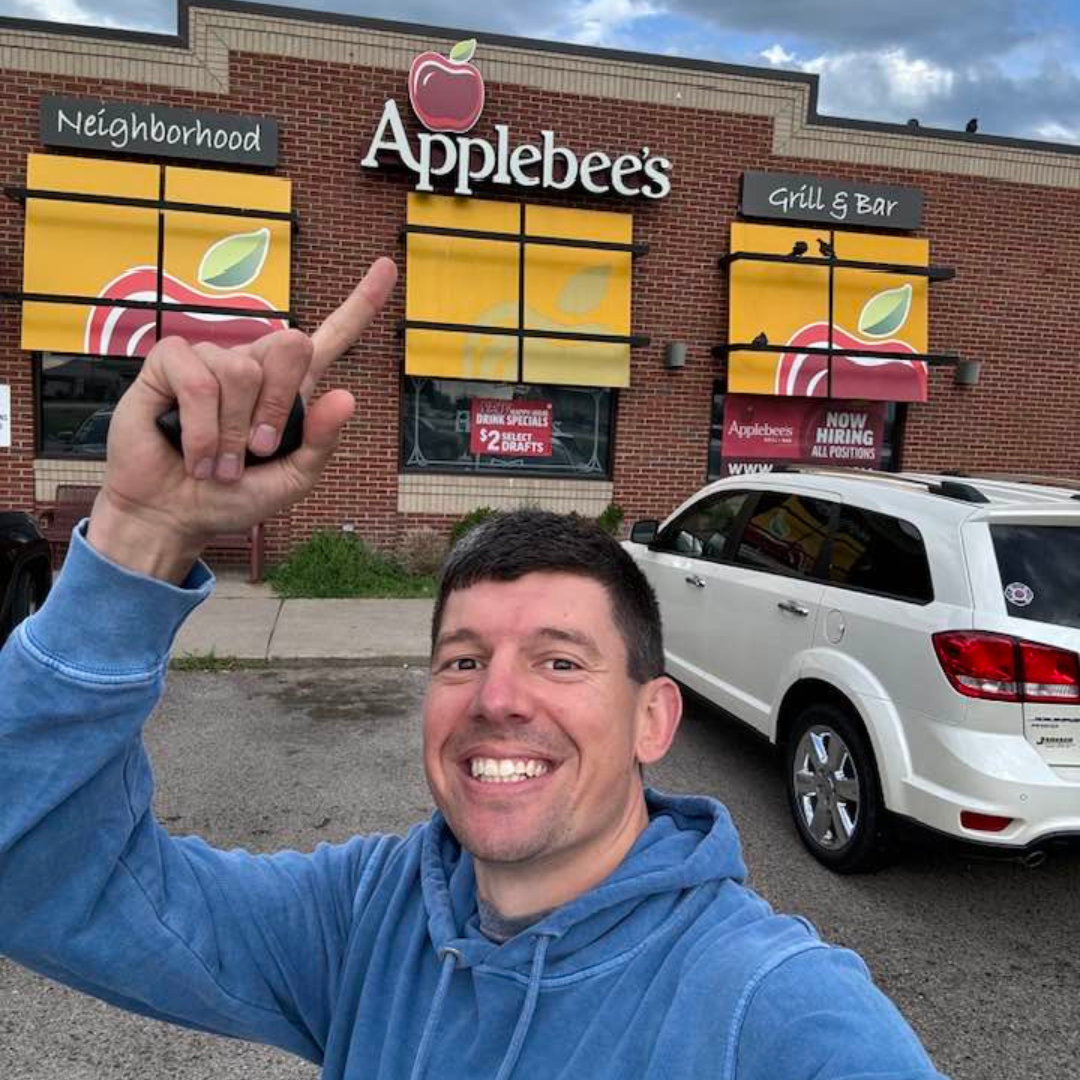
| Applebee's | Unrated | Casual Dining | 6.0 to 7.5% |
| Regional / Local Concept | Unrated | Varies | 7.0 to 9%+ |
What to Check Beyond the Rating
The rating is a starting point, not the finish line. For any tenant, rated or not, I also look at:
- Same-store sales trends: Is this specific location growing, stable, or declining? If the franchisee will share it, this is the single most predictive data point for lease renewal probability.
- Guarantee structure: Is the lease guaranteed by the corporate parent or just the franchisee entity? A franchisee with 3 locations is not the same credit risk as a franchisee with 300.
- Operational tenure at this location: A tenant who has been in a building for 12 years and is renewing has demonstrated they want to be there. A new construction lease from a concept with no track record at that address carries more uncertainty.
- Category resilience: Dollar stores and fast food performed through 2008 and COVID. Sit-down casual dining and apparel did not. Category matters independent of the specific tenant's rating.
Want Tom's tenant evaluation checklist?
It's in the free NNN Starter Kit along with the full deal framework.
Area 2: Lease Structure
Two deals with identical cap rates and identical tenants can have completely different risk profiles based on what is in the lease. This is the area most beginners underanalyze because reading leases is tedious. It is also where experienced investors find edge.
Lease Term Remaining
Remaining term is the most visible lease variable and it directly affects cap rate. Longer term means more predictability and a lower cap. My personal minimum is 7 years of remaining primary term. Below that you are buying significant re-leasing risk into the deal: and you need to price that risk into your offer accordingly.
Remaining Term Assessment
Tom's FrameworkLease Type: NNN vs. Absolute NNN
A standard NNN lease may still leave the landlord responsible for roof and structure. An absolute NNN lease eliminates all landlord obligations with no exceptions. Always identify which type you are buying. On a 20-year-old building, a roof replacement could cost $80,000 to $150,000 and materially change deal returns if you are responsible for it.
Rent Escalation Clauses
Fixed rent loses purchasing power over time. The best leases include scheduled increases. The structure matters.
Flat rent (no bumps): $72,000/year in year 15
Total 15-year income: $1,080,000
10% bump every 5 years:
Yr 1-5: $72,000 | Yr 6-10: $79,200 | Yr 11-15: $87,120
Total 15-year income: $1,192,800
Difference: +$112,800 from rent bumps alone
Renewal Option Language
Renewal options at below-market rent can lock you into underperforming cash flow for decades. If a tenant has five 5-year renewal options at the original lease rate and market rents have risen 40% over the primary term, they will exercise every option and you will never see market rent. Always check whether renewal options are at original rate, fair market value, or a fixed escalation.
Area 3: Location Quality
The lease ends someday. When it does, the building either re-leases quickly at market rent or it sits vacant. Location quality is what determines which outcome you get.
This is the area where the most mistakes get made in NNN investing. Investors get hypnotized by a strong tenant and a long lease and forget to ask the most important question: if this tenant leaves, what is this building worth?
What I Look at for Location
- Traffic count: Minimum 15,000 vehicles per day for most retail concepts. Fast food and convenience can work at lower counts in the right market. The tenant's own site selection data is the best signal: they chose this location for a reason.
- Demand generators: Grocery anchors, major employers, residential density, and hospital or university proximity all drive durable foot traffic. A Dollar General next to a Walmart draws differently than one on an isolated rural highway.
- Visibility and access: Corner lots with dual street access outperform mid-block locations. Drive-through access matters for QSR. These are not negotiable for the tenant's operations: and they matter for re-leasing too.
- Market growth trajectory: Is the surrounding population growing, stable, or declining? Census data and local permit activity tell this story. I have passed on deals with excellent leases in shrinking markets.
- Replacement tenant viability: Who else would lease this building if the current tenant left? If the building is a highly customized drive-through configured specifically for one QSR brand, your replacement tenant pool is narrower than a vanilla retail box.
The Replacement Tenant Test
For every deal I look at, I run a mental exercise: the tenant calls me tomorrow and says they are closing this location at lease end. Who do I call next? If I can name three or four logical replacement tenants within 30 seconds, the location passes. If I struggle to name one, I need to think much harder about the price I am willing to pay.
Area 4: Deal Economics
This is where the math lives. Cap rate gets the most attention but it is only one of four numbers that tell you whether a deal works.
Cap Rate
Cap rate is the starting point for valuation. Net Operating Income divided by purchase price. In NNN the NOI equals the base rent because the tenant pays all operating expenses. The cap rate comparison that matters is not an absolute number: it is whether the cap rate offered is appropriate relative to the tenant credit, lease term, and market conditions at the time of purchase.
Annual Rent (NOI): $72,000
Cap Rate: 6.0%
Down Payment (30%): $360,000
Loan Amount: $840,000
Rate: 6.75% / 25-yr amortization
Annual Debt Service: $72,384
DSCR: $72,000 / $72,384 = 0.99: Too thin
Renegotiate to $1,100,000 purchase:
New Cap Rate: 6.54%
New Loan: $770,000 | New Debt Service: $66,352
New DSCR: $72,000 / $66,352 = 1.09: Better
Cash-on-Cash: ($72,000 - $66,352) / $330,000 = 1.7%
Debt Service Coverage Ratio (DSCR)
DSCR tells you how much cushion exists between income and debt payments. Most commercial lenders require a minimum 1.20 to 1.25 DSCR to approve a loan. Below 1.0 means the property does not generate enough income to service the debt: the lender will not touch it and you should not either. I target 1.25 or better on acquisitions.
Cash-on-Cash Return
Cash-on-cash measures actual cash returned on actual cash invested. It is the number that tells you what your down payment earns you each year after debt service. Quality NNN deals in the current market typically produce 1.5 to 4% cash-on-cash depending on leverage and cap rate. These are not high-yield returns: NNN investing is primarily about capital preservation, appreciation, and tax efficiency rather than yield maximization.
Total Return Projection
The real return in NNN comes from the full hold: cash flow plus principal paydown plus appreciation at exit. A deal that cash flows modestly but holds a 15-year Starbucks lease in a growing market may produce an excellent IRR over the hold period even with a thin going-in yield.
The Burger King 1031: Thin Cap Rate, Strong Total Return
We used a 1031 exchange to acquire a Burger King NNN property at a 5.75% cap rate: not a screaming value on day one. But the location was exceptional, the lease had 14 years remaining with 10% bumps every 5 years, and the franchisee had a corporate guarantee. Seven years in, the property has appreciated significantly and the rent bumps have increased NOI by 21%. The going-in cap rate was only one part of the story.
Area 5: Capital Stack
The capital stack is how you finance the deal. It is the most flexible of the five areas because you can often structure it multiple ways. Getting the capital stack right protects your downside and maximizes your return on equity.
Conventional Commercial Loan
The standard structure for NNN acquisitions. Most lenders require 25 to 35% down, underwrite based on the property's DSCR rather than personal income, and offer 5 to 10 year fixed rate terms with 20 to 25 year amortization. The key variables to negotiate are rate, amortization period, prepayment penalty structure, and recourse vs. non-recourse terms.
1031 Exchange Capital
One of the most powerful tools in NNN investing. If you are selling an appreciated property, rolling proceeds into an NNN deal through a 1031 exchange defers all capital gains taxes. This effectively means the government is lending you the tax money interest-free to invest in your next deal. We have used this strategy repeatedly to grow the portfolio without triggering large tax events.
Equity Partners and Syndication
On larger deals, bringing in equity partners through a syndication structure allows you to acquire assets beyond your individual capital capacity while earning acquisition fees, asset management fees, and a promote on returns. This is how Bankston Wealth structures deals for our investor group: we acquire and operate, investors provide equity capital, and returns are distributed based on the operating agreement.
Optimize for Total Return, Not Just Leverage
Higher leverage amplifies both gains and losses. In NNN investing, where the primary goal is predictable long-term income with capital preservation, over-leveraging a deal to maximize cash-on-cash return introduces unnecessary risk. I target a capital stack that produces positive DSCR cushion at acquisition and can survive a 25% decline in property value without going underwater on the loan.
Deal Killers: What Makes Me Walk Away
After 47 deals, I know the red flags that appear in the first 20 minutes of reviewing a deal package. Any one of these is enough to pass.
- Franchisee-only guarantee with no corporate backstop: If the lease is only guaranteed by a 3-location franchisee LLC with no corporate parent guarantee, you are underwriting a small business, not a national brand.
- Renewal options at original rent rate in an appreciating market: You will never see market rent on this asset if the tenant exercises options.
- Location with no replacement tenant thesis: If I cannot name plausible replacement tenants quickly, the location is not strong enough for the asking price.
- DSCR below 1.15 at current financing rates: Too thin. One rate reset and you are feeding the property.
- Deferred maintenance on a NN or NNN (non-absolute) lease: If the landlord is responsible for the roof and I am looking at a 35-year-old building, that is a capital call waiting to happen.
- Asking price that cannot be justified by a 7% cap or better given the tenant credit: If the seller is pricing a regional, unrated tenant at a 5% cap, the math does not work regardless of how the broker presents it.
Deal Analysis Is Not a Substitute for Professional Advice
This framework reflects how I evaluate deals for my own portfolio. It is not legal, tax, or financial advice. Every deal has unique characteristics that require review by a qualified commercial real estate attorney, CPA, and lender before you commit capital. Always consult professionals on your specific situation.
Putting It All Together: The 20-Minute First Pass
When a deal lands in my inbox, here is the sequence I run before I spend serious time on it.
- Who is the tenant and what is their credit? Investment-grade or not. If unrated, what is the guarantee structure? If neither is acceptable, stop here.
- How much lease term remains? Under 7 years primary term needs a significant discount thesis. If there is no credible discount thesis, stop here.
- What type of net lease is it? Absolute NNN or standard NNN. If standard, what are my landlord obligations? If there is a deferred maintenance issue on a non-absolute lease, I need to price that in immediately.
- What is the asking cap rate relative to comparable tenant deals in this market? If the cap rate is tighter than comparable trades without a clear reason, the asking price is wrong.
- What does the location look like on satellite and traffic data? Google Maps, AADT traffic count, surrounding anchors. Two minutes of looking tells me a lot about whether this location has replacement tenant viability.
- Does the basic DSCR math work at current lending rates? Back-of-envelope: NOI divided by estimated annual debt service. If it is under 1.15, I need a compelling reason to keep going.
Six questions. Twenty minutes. Most deals wash out here. The ones that survive get a full underwriting pass.
Want to go deeper with Tom directly?
Find out if the FFL Accelerator is the right next step for where you are in your investing journey.
Frequently Asked Questions
What is a good cap rate for a triple net lease?
It depends entirely on the tenant. Investment-grade QSR tenants like McDonald's and Starbucks trade at 4.25 to 5.5% cap rates. Dollar General and similar concepts trade at 5.5 to 6.5%. Non-investment-grade regional tenants trade at 6.5 to 8% or higher. The right cap rate is always relative to interest rates, lease term, and tenant credit: not an absolute number in isolation.
What is DSCR and why does it matter for NNN deals?
Debt service coverage ratio measures how much the property's net operating income exceeds the annual mortgage payment. A 1.25 DSCR means the NOI is 25% higher than debt service. Most commercial lenders require 1.20 to 1.25 minimum. Below 1.0 the property cannot service its own debt. In NNN investing DSCR is highly predictable because the tenant pays all operating expenses and base rent is fixed by the lease.
How do I know if an NNN location is strong?
Run the replacement tenant test: if this tenant vacates at lease end, who do you call next? If you can name two or three logical replacements quickly, the location is strong. If you struggle, the location is weaker than the lease makes it appear. Also check traffic counts (minimum 15,000 VPD for most retail), proximity to demand generators like grocery anchors, and market population trends.
What is the difference between NNN and absolute NNN for deal analysis?
In a standard NNN lease the landlord may still be responsible for roof and structure. In an absolute NNN lease the tenant is responsible for everything. For deal analysis this matters because a deferred maintenance issue on a non-absolute NNN lease is a real capital liability you need to price. Absolute NNN eliminates that variable entirely.
What makes an NNN deal a pass?
Franchisee-only guarantee with no corporate backstop, renewal options at original rent rate in an appreciating market, a location with no replacement tenant thesis, DSCR below 1.15 at current rates, deferred maintenance on a non-absolute lease, or asking cap rates that do not reflect the actual tenant credit risk.